Cross-Selling at Checkout
· 3 min read

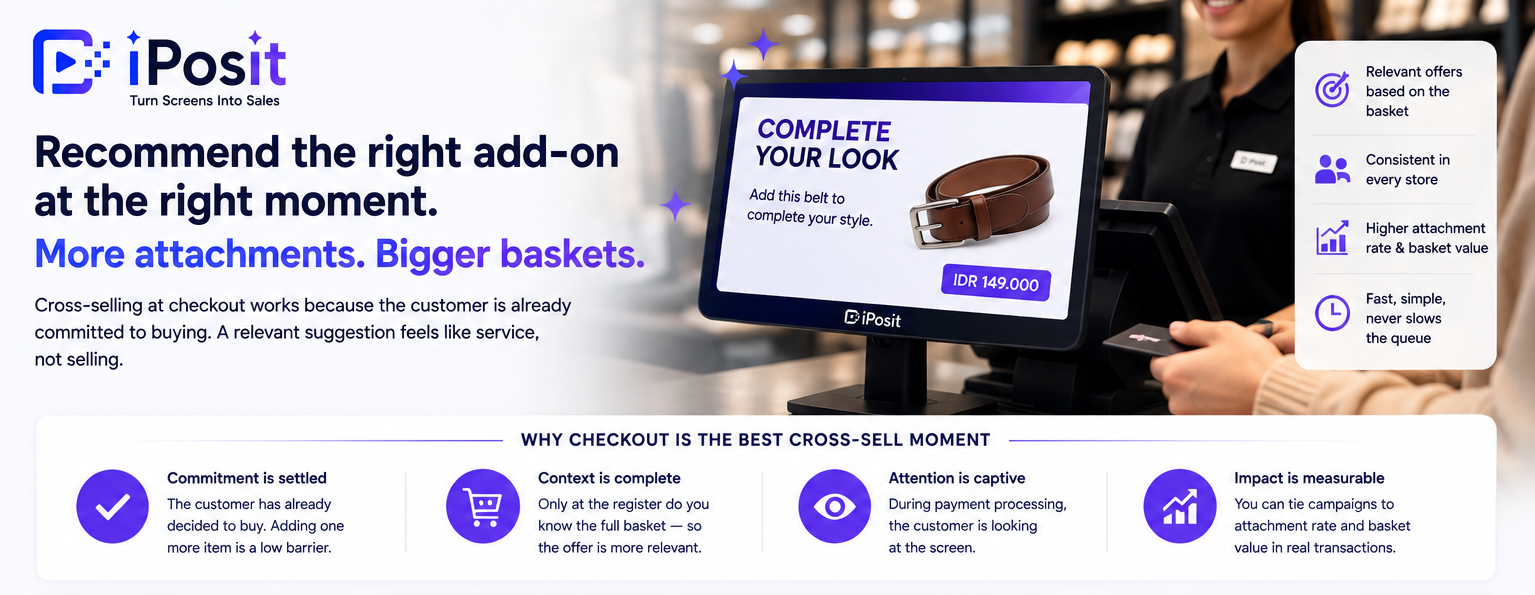 **
Cross-selling at checkout is the practice of recommending a relevant add-on at the moment a customer is already committed to buying — and it works because the hardest part of the sale is finished. The basket is open, the wallet is out, and a well-chosen suggestion feels like service, not selling.
**
Cross-selling at checkout is the practice of recommending a relevant add-on at the moment a customer is already committed to buying — and it works because the hardest part of the sale is finished. The basket is open, the wallet is out, and a well-chosen suggestion feels like service, not selling.
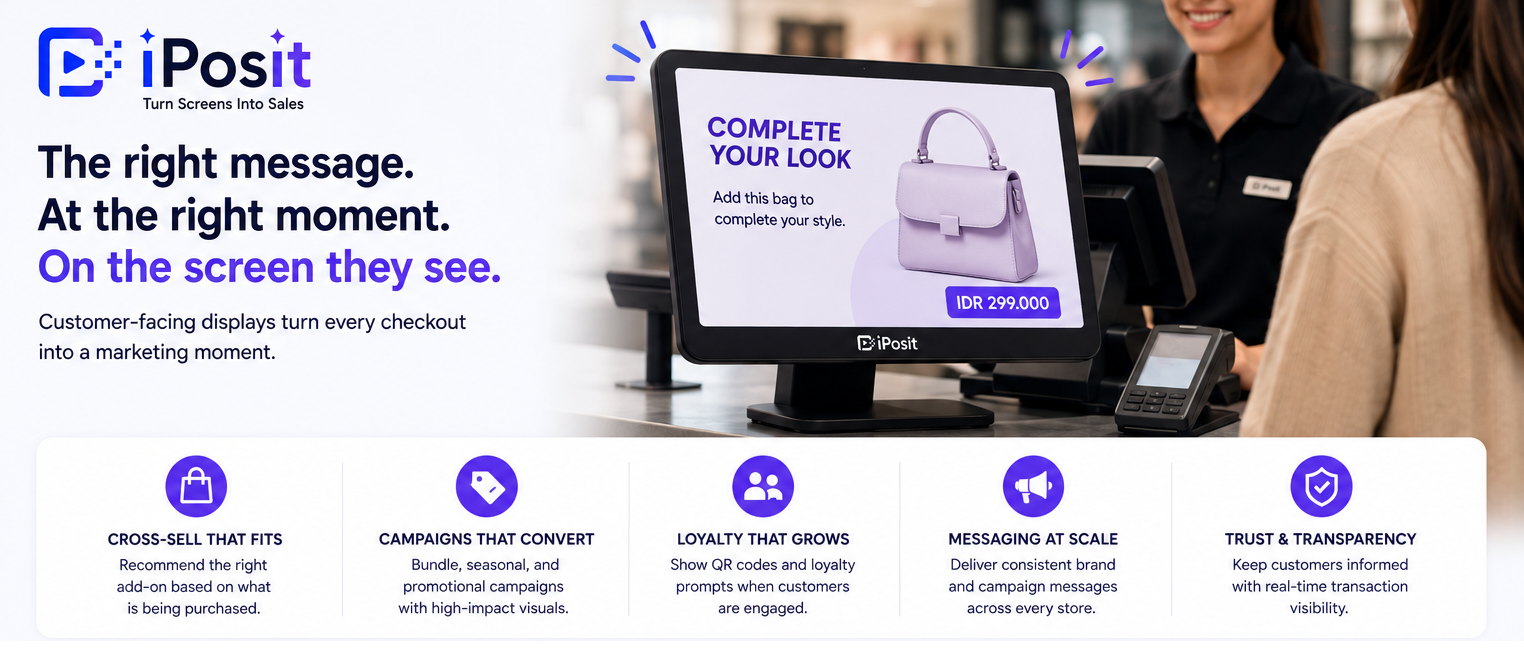 **A customer-facing display is the second screen at the point of sale — the one turned toward the shopper. Traditionally it just mirrored the receipt: items, prices, total. Modern retail treats it as something much more valuable: a guaranteed-attention marketing surface that reaches every single customer at the moment of purchase.
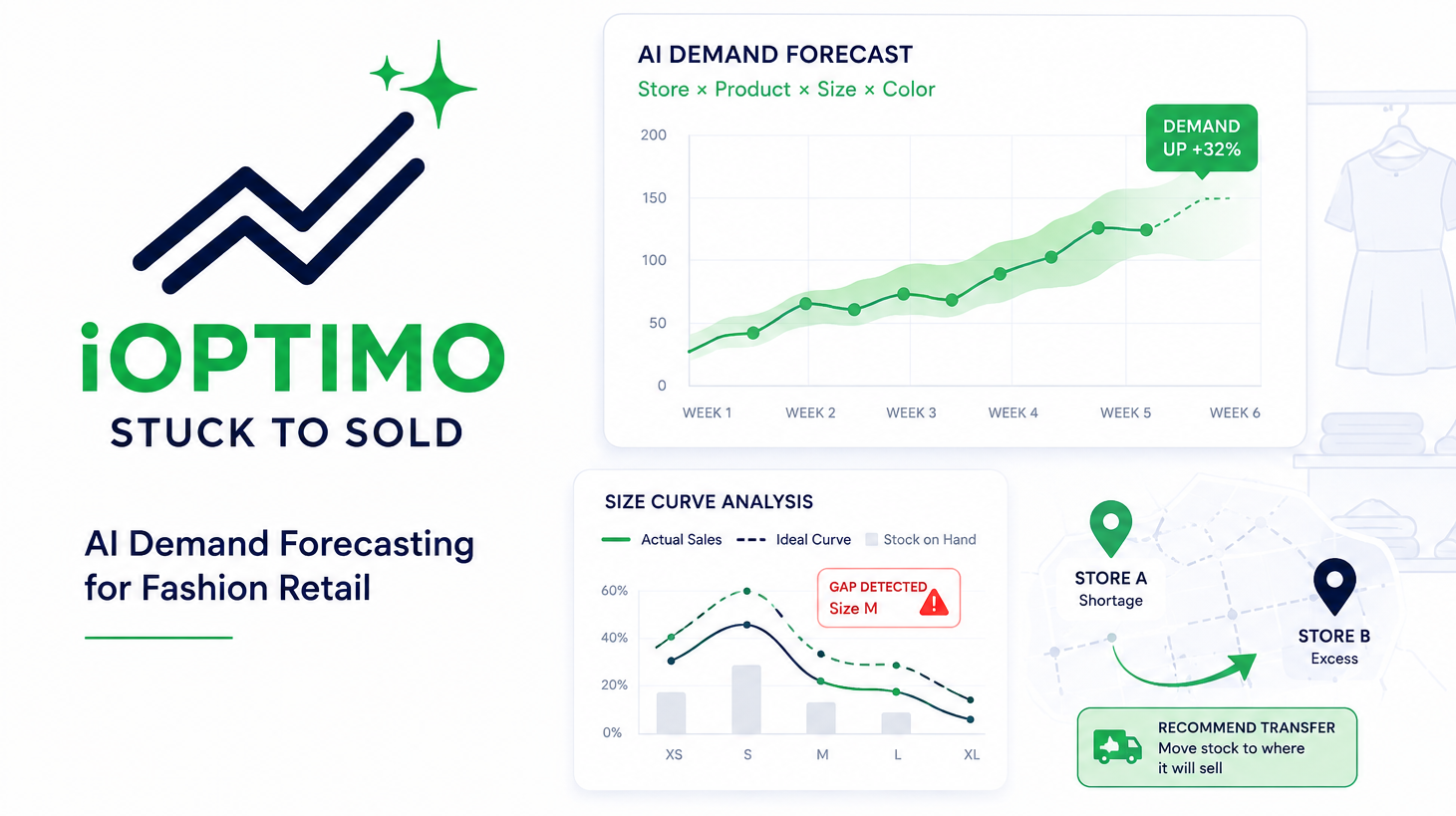 **
AI demand forecasting for fashion retail predicts sell-through at the level where fashion is actually bought: store × product × size × color. That granularity is what turns a forecast from a finance report into an operational tool — one that tells you which size curve will break in which store, weeks before it happens.
**
AI demand forecasting for fashion retail predicts sell-through at the level where fashion is actually bought: store × product × size × color. That granularity is what turns a forecast from a finance report into an operational tool — one that tells you which size curve will break in which store, weeks before it happens. AI-powered inventory optimization uses machine learning to forecast demand at the store and SKU level, detect shortage and excess inventory risk early, and recommend exactly which stock should be moved, reordered, or marked down before those problems impact sales and profitability.
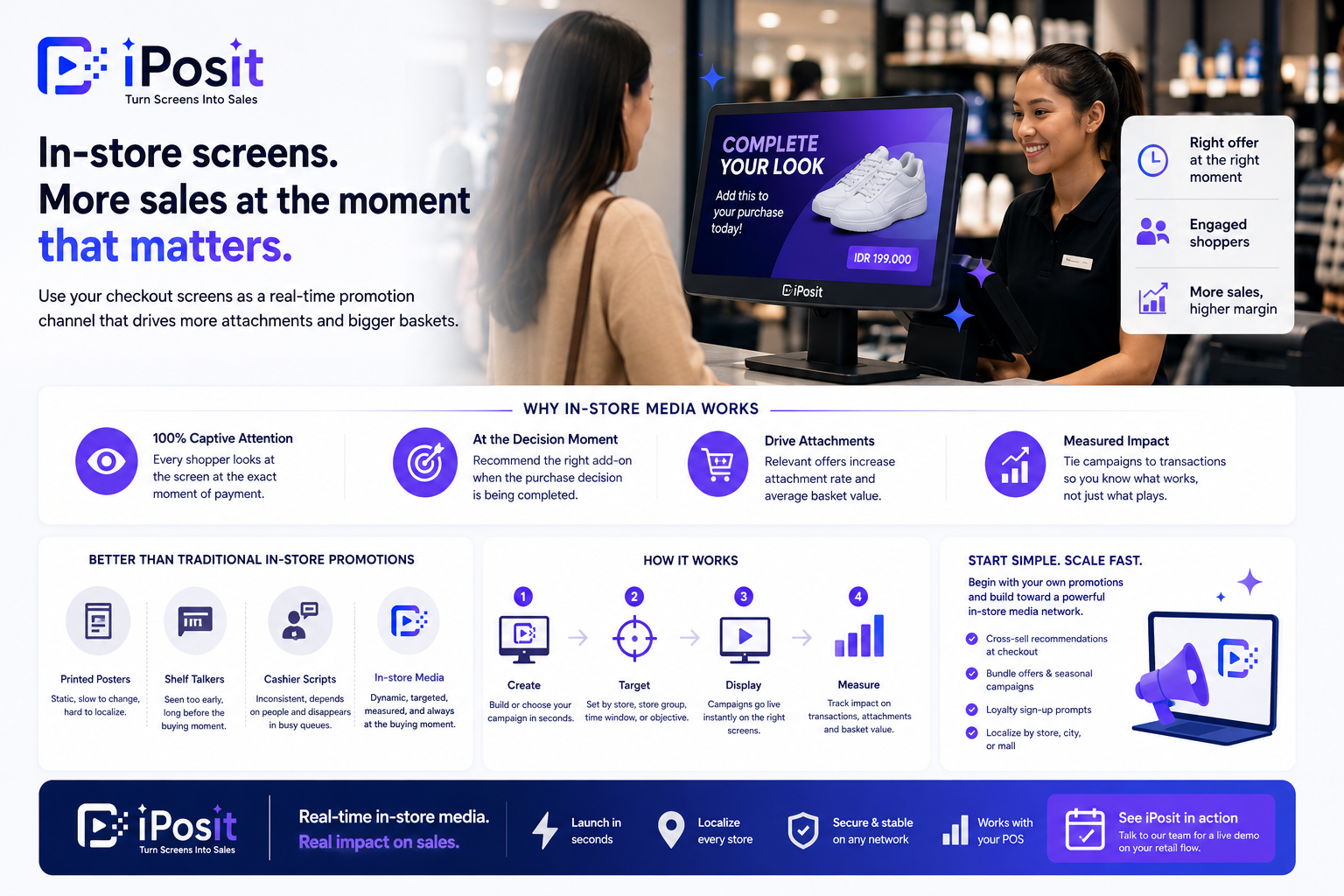 **
In-store retail media means using the screens inside your own stores — especially customer-facing displays at checkout — as a promotion channel, the same way e-commerce sites use their homepages and search results. For physical retailers it is the most under-used media asset they own: every shopper who reaches the counter looks at that screen, at the exact moment a purchase decision is being completed.
**
In-store retail media means using the screens inside your own stores — especially customer-facing displays at checkout — as a promotion channel, the same way e-commerce sites use their homepages and search results. For physical retailers it is the most under-used media asset they own: every shopper who reaches the counter looks at that screen, at the exact moment a purchase decision is being completed.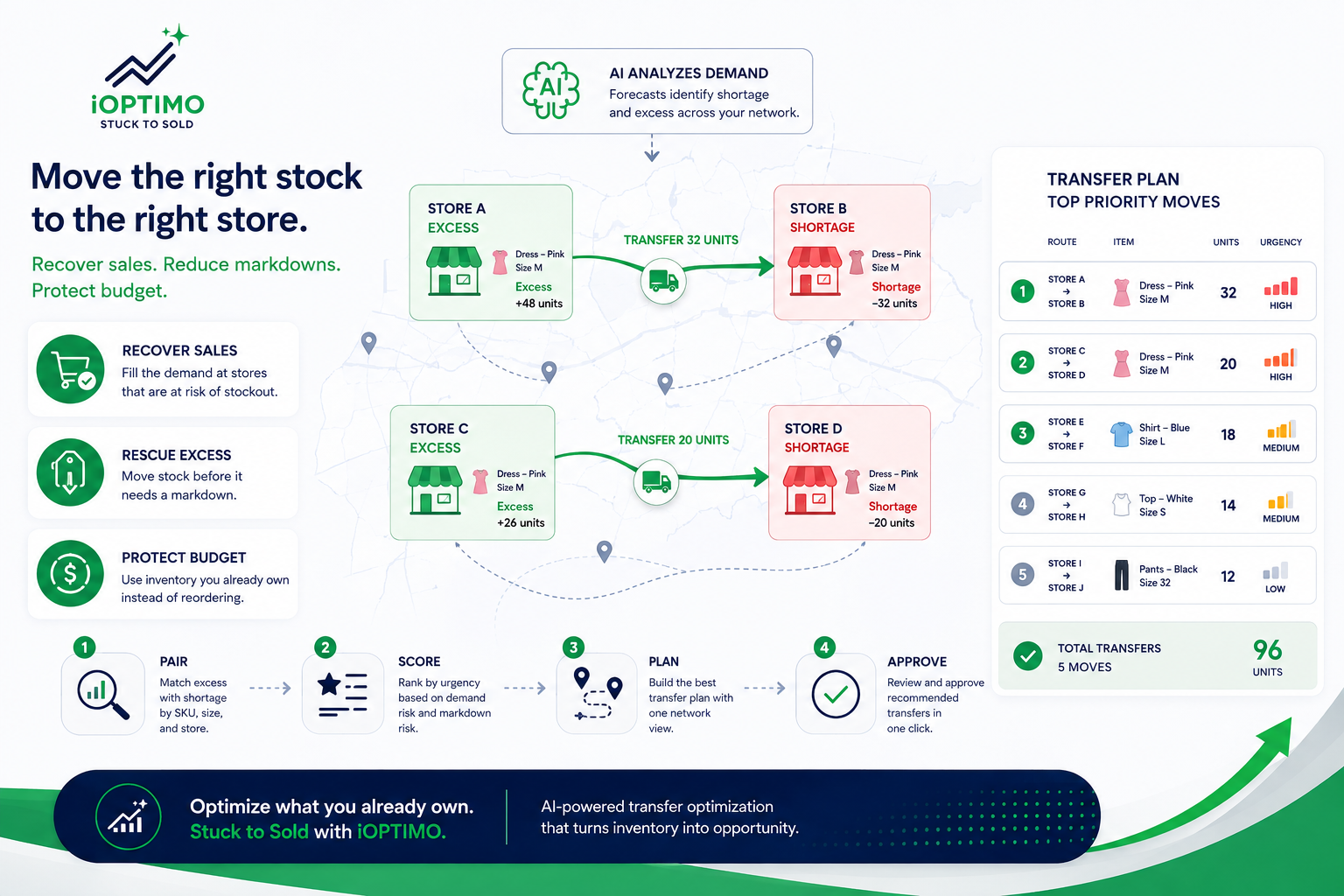 **
Inter-store stock transfer optimization is the practice of rebalancing inventory you already own: moving units from stores where they sit idle to stores where they would sell this week. For multi-store retailers it is usually the fastest inventory win available, because it recovers sales and protects margin without spending a single dollar of new purchase budget.
**
Inter-store stock transfer optimization is the practice of rebalancing inventory you already own: moving units from stores where they sit idle to stores where they would sell this week. For multi-store retailers it is usually the fastest inventory win available, because it recovers sales and protects margin without spending a single dollar of new purchase budget.